
Evidence Check
Are peptides the real future of longevity?
What the published research shows about BPC-157, TB-500, CJC-1295, ipamorelin, GHK-Cu and collagen, and how they are regulated.
At a glance
- Background
- Peptides are short chains of amino acids that act as signals in the body. A handful of lab-made peptides, such as insulin and the GLP-1 drugs for diabetes and obesity, are among the most successful medicines of the past century. In recent years, a different group of peptides has been marketed directly to consumers online and on social media, promising faster healing, better skin and slower aging.
- Purpose
- To summarize, for a general reader, what the published research shows about the most popular of these products and how they are regulated.
- What the evidence shows
- BPC-157 has a large body of animal research, but its human evidence is limited to small studies without a comparison group. TB-500 has never been tested in people. CJC-1295 raised hormone levels in one human trial before its development was stopped, and ipamorelin failed to beat placebo in its only clinical trial. Injectable GHK-Cu has no clinical trials, although GHK-Cu skin creams have some supporting data. Collagen peptides taken by mouth have the strongest human evidence, mainly for skin, while a widely reported claim that they reduce biological age rests on a single study without a placebo group. Products bought online may not contain what their labels state.
- What this means for you
- Several of these peptides show promise in the laboratory. For the injectables, however, the right uses, doses, frequency and length of treatment remain unknown, and their long-term safety has not been studied. Rigorous human trials are needed before any of them can be recommended.
In this article
What are peptides?
A peptide is a short chain of amino acids, the same building blocks that make up proteins, only shorter and simpler. The body makes many of them and uses them as messengers. Insulin, produced by the pancreas, controls blood sugar. Endorphins, released by the nervous system, dampen pain. Growth hormone-releasing hormone tells the pituitary gland, at the base of the brain, when to release growth hormone. Because each peptide fits only certain receptors on cells, like a key in a lock, they can be very precise.
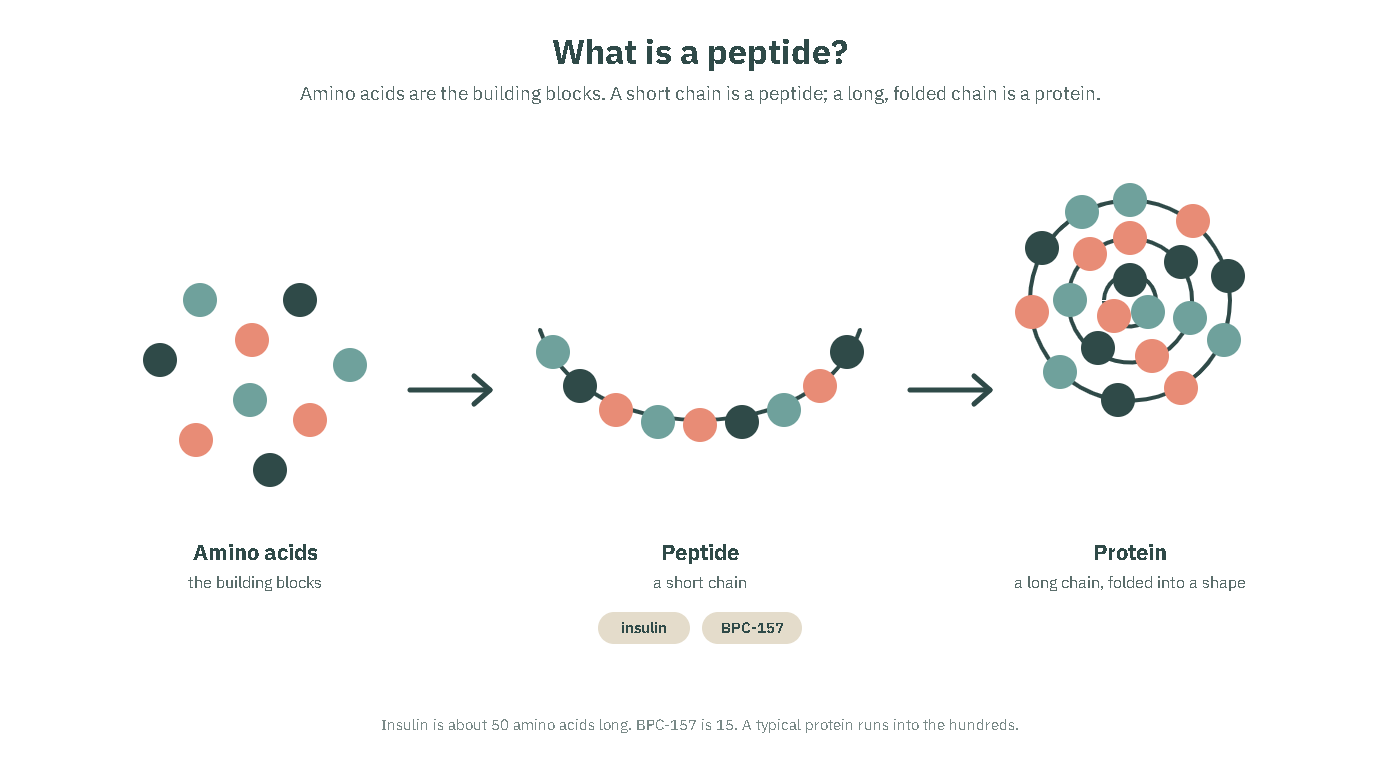
Lab-made peptides have played a huge part in modern medicine, from manufactured insulin to the weight-loss and diabetes drugs semaglutide (Ozempic, Wegovy) and tirzepatide (Mounjaro, Zepbound), known as GLP-1 drugs. Tirzepatide shows the standard a peptide drug must meet. Its safety was established in more than 7,700 participants across its Phase 3 trials, in which people lost about 15% to 21% of their body weight over 72 weeks. The most common side effects were digestive, mainly nausea, diarrhea and vomiting, usually mild to moderate and easing with continued use. The FDA (Food and Drug Administration) approved it for type 2 diabetes in 2022, obesity in 2023 and sleep apnea in 2024. The FDA approved 26 new peptides between 2016 and 2022, and the global market, valued at $37.8 billion in 2022, is projected to reach $85.9 billion by 2031.
Alongside these approved medicines, a second market has grown. Peptides such as BPC-157, TB-500, CJC-1295, ipamorelin and GHK-Cu are promoted on social media and sold online for injury recovery, muscle growth, fat loss, skin health and anti-aging. None of them is approved by the FDA, and they are often sold through "gray market" websites labeled "for research purposes only." Harvard's Dr. Pieter Cohen, who studies supplements, has described the health claims made for them as "divorced from data."
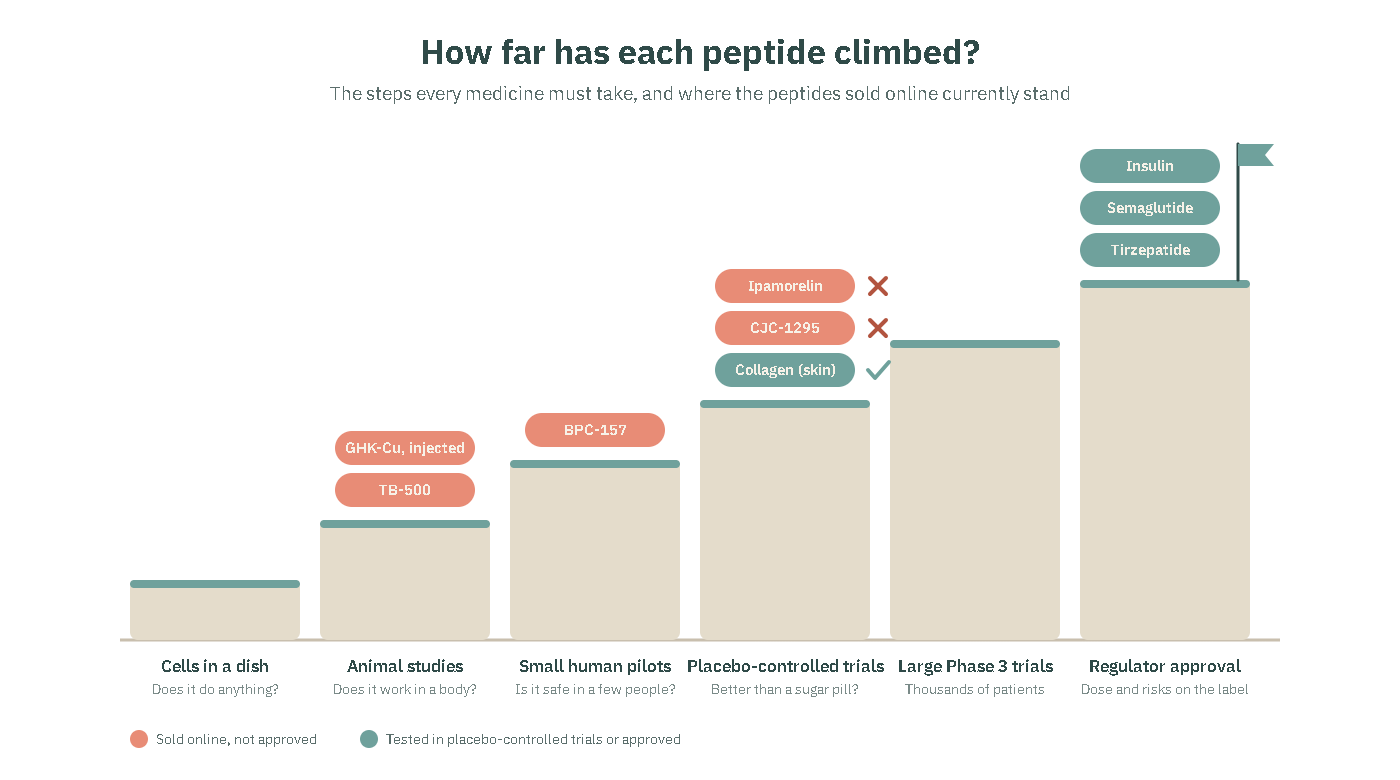
This article examines the most popular of these peptides, together with collagen peptides, which are widely sold as supplements. For each, it summarizes where the peptide came from, what it is claimed to do, what laboratory and animal studies show, what human studies show, and what remains unknown. It then turns to how these products are regulated and what testing has found inside them.
BPC-157: the healing peptide
BPC-157 (Body Protection Compound-157) is the best-known of the experimental healing peptides. It was first reported in 1991 by Predrag Sikirić and colleagues at the University of Zagreb, Croatia. It is promoted online for gut healing, recovery from tendon and muscle injuries, reduced inflammation and general anti-aging.
Researchers believe BPC-157 protects the cells lining blood vessels, encourages new blood vessel growth, raises levels of growth factors involved in repair and lowers levels of inflammatory signals. A 2020 lab study from Taiwan found that it relaxes and widens blood vessels, in rat tissue and in human cells, but this has not been tested in people.
In animals, BPC-157 has helped torn knee ligaments, injured tendons, damaged muscles and broken bones heal faster or stronger. A 2023 study also found it protected rats' organs and blood pressure after a severe abdominal injury, though with only six animals per group.
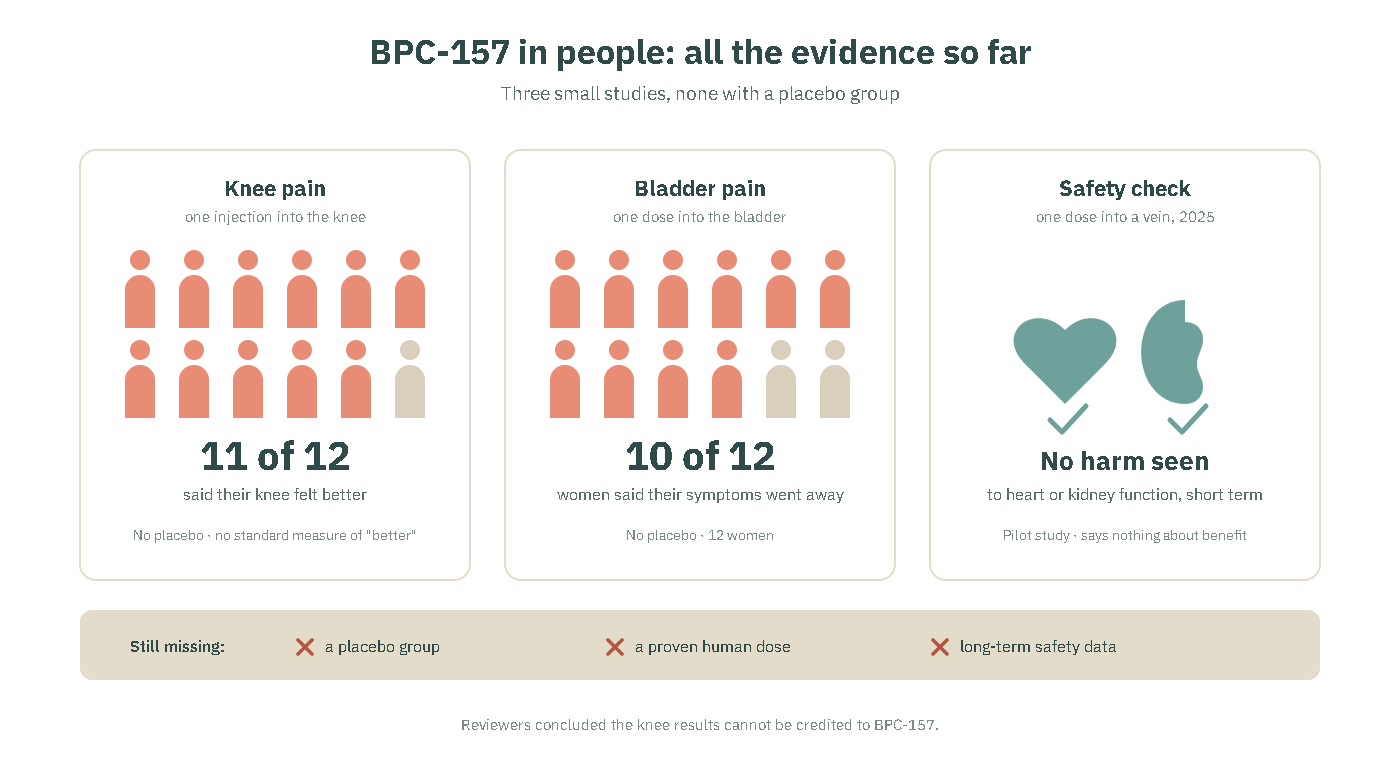
No trial comparing BPC-157 with a placebo has been carried out in people. The available human evidence consists of small studies without a comparison group, summarized in Figure 3.
Because BPC-157 promotes blood vessel growth, reviewers have raised a theoretical concern that it could also support tumor growth, which has not been studied in people, although animal studies have not shown more cancer. BPC-157 is banned in competitive sport by the World Anti-Doping Agency (WADA).
TB-500: the recovery peptide
TB-500 is a synthetic, seven-amino-acid fragment of thymosin beta-4 (TB-4), a natural protein found throughout the body. It is sold online to promote tissue repair and muscle growth, and it originated in veterinary medicine, where it was used by trainers in the horse-racing industry.
Most of the research is on the full TB-4 protein, not TB-500. In animals, TB-4 helped heal heart muscle, leg muscle and a knee ligament. TB-500 itself has barely been studied: in the one rat wound-healing study, it did no better than no treatment. Whether TB-4 raises or lowers cancer risk is also disputed.
No study has tested TB-500 in people. The only human safety data come from early trials of the full TB-4 protein. Because TB-500 is a different molecule, these results cannot simply be applied to it. No clinical trial has tested either TB-4 or TB-500 for muscle, tendon or joint conditions. Both are banned by WADA.
CJC-1295 and ipamorelin: the growth-hormone boosters
Growth hormone secretion declines by roughly 14% per decade after age 30, a change linked to less muscle, more abdominal fat, thinner bones and slower recovery. CJC-1295 and ipamorelin are marketed, usually together, as a way to raise the body's own growth hormone.
CJC-1295 is a lab-made, long-acting version of the signal the brain uses to tell the pituitary gland to release growth hormone. Ipamorelin works on a different receptor, the one for ghrelin, the "hunger hormone," with the same end result. Each has been tested in people exactly once. CJC-1295 raised hormone levels for about a week in a 2006 trial, but a separate trial was stopped after a participant died of a heart attack, judged unrelated to the drug, and development never resumed. Ipamorelin, tested for bowel recovery after surgery, was safe but no better than placebo.
Neither has been tested for muscle, tendon or joint conditions, alone or together, and neither has an established dose. The long-term effects of raising growth hormone, including on the heart, blood sugar and cancer risk, remain unknown.
GHK-Cu: the skin peptide
GHK-Cu is a three-amino-acid peptide bound to a copper atom. It was discovered in 1973 by Loren Pickart. The body releases GHK-Cu after tissue injury, and its blood levels fall by more than half between the ages of 20 and 60. It is sold for firmer skin, collagen production, hair growth and anti-aging, increasingly as an injection.
In laboratory and animal studies, GHK-Cu increased collagen and elastin production, stimulated the growth of blood vessels and nerves, and had antioxidant and anti-inflammatory effects. It improved wound healing in rabbits and rats. Researchers have estimated that GHK affects about 31% of human genes, many of them involved in repair. A 2026 review notes that what these changes mean in a living body has yet to be shown in controlled human studies.
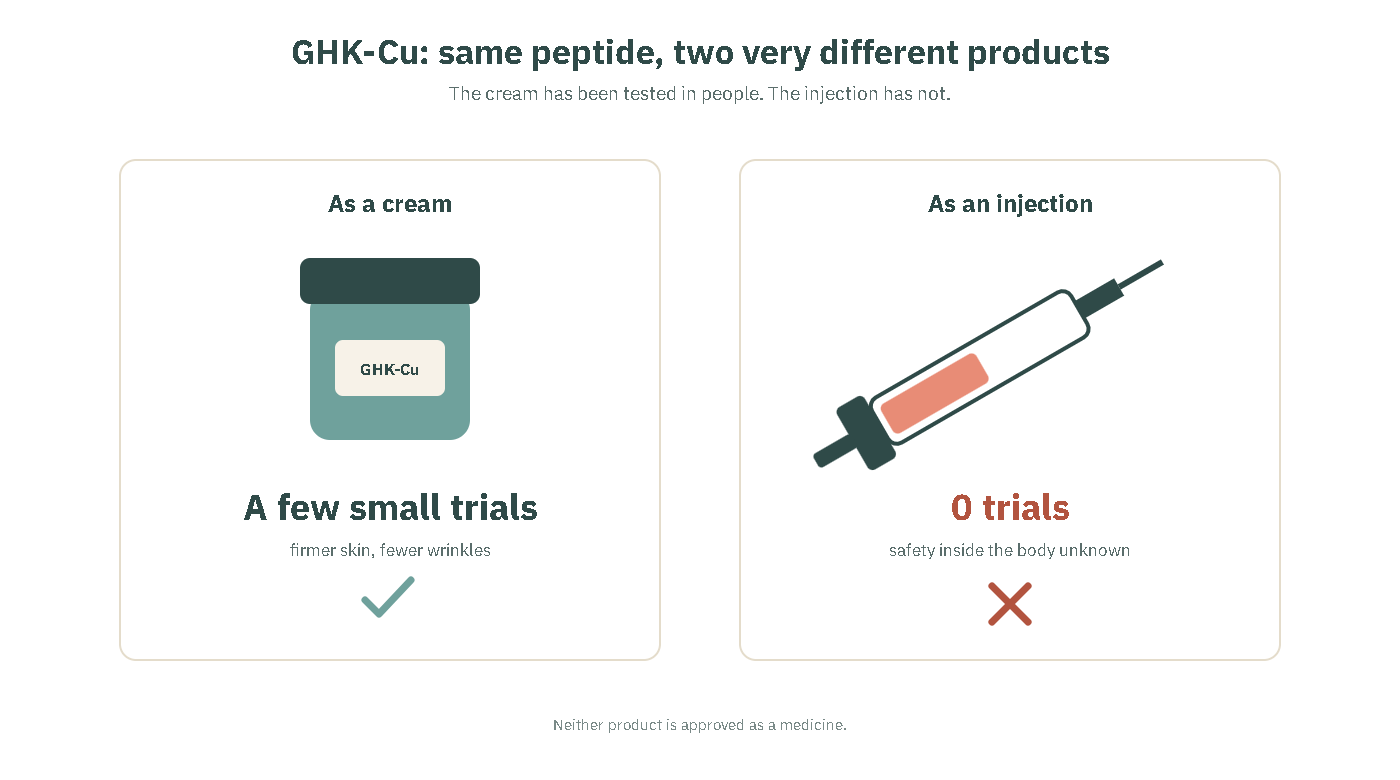
As a cream, GHK-Cu has some human evidence (Figure 4): a few small trials, two of them against a placebo or a plain cream, found thicker skin, fewer fine lines and smaller wrinkles. Several of these results were presented only as conference abstracts, and the review that collects them was written by two authors affiliated with a company called Skin Biology.
Collagen peptides: the best-studied of the group
Collagen peptides are fragments of collagen protein, usually taken by mouth as a powder and sold as a dietary supplement. After digestion, small fragments of it appear in the blood, which offers a plausible route by which they could affect tissues. They are promoted for skin, joints and tendons, recovery and, more recently, slower biological aging.
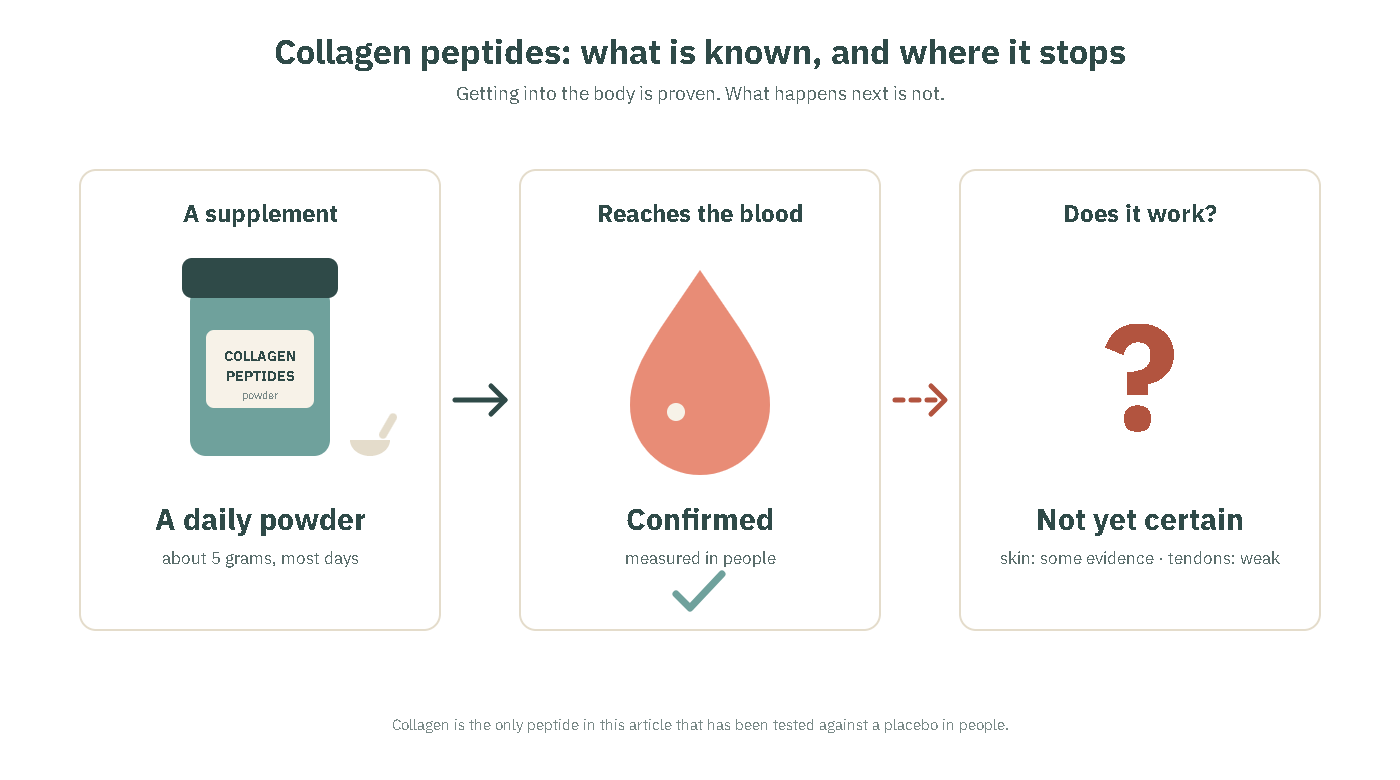
For skin, the evidence is the strongest of any product in this article: four separate placebo-controlled trials found better hydration and elasticity within 12 weeks, and some reported fewer wrinkles. For tendons and ligaments it is weaker (Figure 5). A 2026 review found six small studies pointing the same way, toward less pain and better function, but most mixed collagen with other ingredients and only two used a placebo. The reviewers concluded that collagen may help alongside rehabilitation, not as a treatment on its own.
In 2025, a study in npj Aging reported that a collagen-based drink reduced participants' biological age by 1.4 years over six months. The human part of the study had important limitations. All 66 participants received the product; there was no placebo group, and 45 completed the biological-age test. Wrinkles did not improve significantly. The trial was funded by the company that sells the product and holds its patent; the company's co-founder and an employee are among the authors.
Collagen supplements are sold on claims about muscle, recovery and joint health that remain unproven, and like other dietary peptides they are largely unregulated. Some benefit for skin is plausible. Anything more is, for now, a promise rather than a finding.
Why regulation matters
None of the injectable peptides discussed above is approved by the FDA for any use. Approved drugs are made under manufacturing standards that check purity, sterility and dose, and their side effects are tracked after approval. Products bought outside this system carry no such assurances.
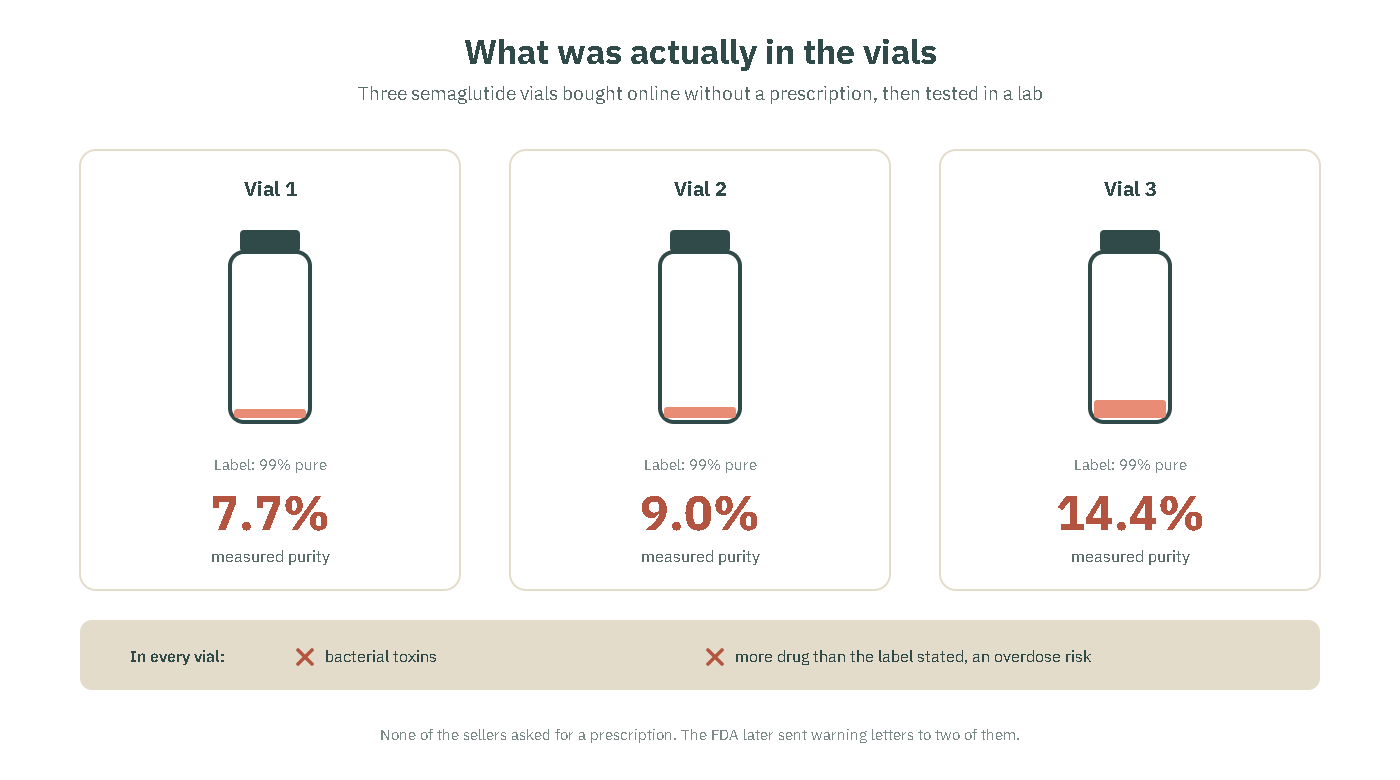
A 2024 study from Hungary measured what that can mean in practice. Researchers searched Google and Bing as a buyer would and found dozens of illegal sellers, some of them peptide dealers, whose busiest sites drew millions of visits in three months. They then ordered semaglutide, the active ingredient in Ozempic, from six of them. None asked for a prescription. The vials that arrived were labeled "research use only" and 99% pure. The lab tests told a different story (Figure 6). If an extensively studied drug fared this way, there is little reason to expect better from peptides with far less oversight.
In recent years the FDA flagged BPC-157, CJC-1295, ipamorelin and injectable GHK-Cu as raising significant safety risks for pharmacy use. That was not a ban, and it did not stop online sales labeled as research chemicals. By May 2026 those listings had been withdrawn, and only the cream form of GHK-Cu remains under review. In the United Kingdom, these peptides are classed as unlicensed medicines, not legal for human consumption, and are typically sold online as research chemicals.
| Substance | FDA status, May 2026 |
|---|---|
| GHK-Cu, cream or other non-injected forms | Under evaluation; an FDA expert committee will review it by February 2027 |
| GHK-Cu, injectable | Not listed |
| BPC-157 | Not listed |
| CJC-1295 | Not listed |
| Ipamorelin | Not listed |
Source: FDA, 503A bulk drug substance categories, May 14, 2026.
So, are peptides the future of longevity?
Peptides are a proven class of medicine. Insulin and the GLP-1 drugs show what peptides can achieve once they have been tested in large, controlled trials. The peptides now marketed for healing and longevity are, for the most part, at a much earlier stage. The table below sums up where each one stands. One note on the last column: collagen is sold as a dietary supplement, and supplements never go through FDA approval.
| Peptide | Tested in people? | Placebo-controlled? | Established dose? | FDA status, May 2026 |
|---|---|---|---|---|
| BPC-157 | Small case series and pilots | No | No | Not listed |
| TB-500 | No | No | No | Not listed |
| CJC-1295 | One hormone-level trial; development stopped | Yes, for hormone levels only | No | Not listed |
| Ipamorelin | One trial, unrelated use; no benefit over placebo | Yes, unrelated use | No | Not listed |
| GHK-Cu, injected | No | No | No | Not listed |
| GHK-Cu, cream | Several small trials | Some | Product-specific | Under evaluation |
| Collagen peptides | Multiple trials, skin and tendons | Yes, for skin | About 5 g/day studied | Sold as a supplement |
Several of these peptides may have real therapeutic potential. However, for the injectable peptides, the right uses, doses, frequency and length of treatment remain unknown, and long-term safety has not been studied. Products bought online may also differ from what their labels state.
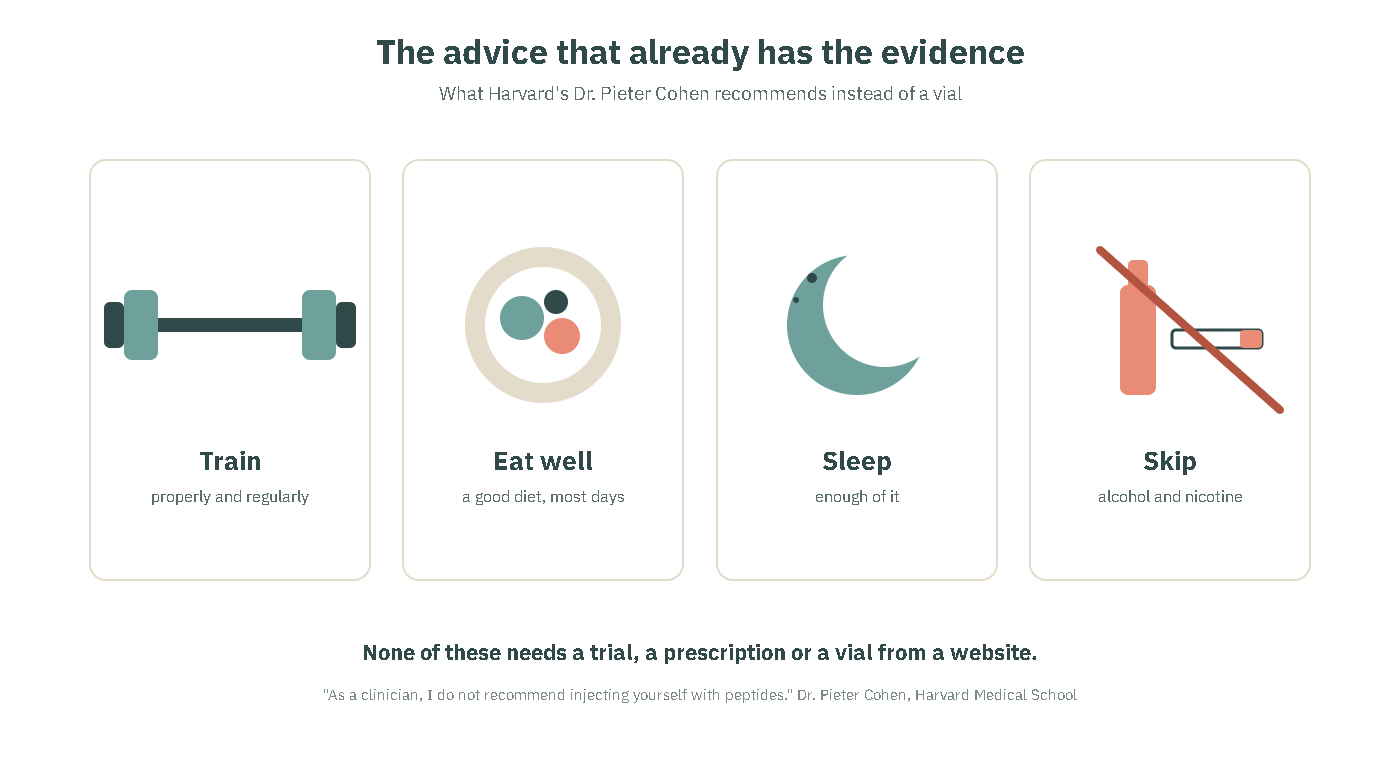
Harvard's Dr. Cohen advises against injecting these peptides and recommends the basics instead (Figure 7). Before any of these peptides can be recommended, well-designed, placebo-controlled human trials will be needed to establish whether they work and whether they are safe.
This article is for information only and is not medical advice.
References
- Multifactor quality and safety analysis of semaglutide products sold by online sellers without a prescription. Ashraf AR et al. J Med Internet Res, 2024.
- Taylor M, reviewed by Cohen P. Peptides: what they are, potential benefits, and safety concerns. Harvard Health Publishing , July 7, 2026.
- Bulk drug substances nominated for use in compounding under section 503A. U.S. FDA., categories update of May 14, 2026.
- Therapeutic peptides in gerontology: mechanisms and applications for healthy aging. Mavrych V, Shypilova I, Bolgova O. Front Aging, 2026.
- Regenerative and protective actions of the GHK-Cu peptide in the light of the new gene data. Pickart L, Margolina A. Int J Mol Sci, 2018.
- Clinical evidence for low-molecular-weight collagen peptides in tendon and ligament tears: a systematic review. Latini L et al. Front Med, 2026.
- A collagen amino acid composition supplementation reduces biological age in humans and increases health and lifespan in vivo. Dakhovnik A et al. npj Aging, 2025.
- Stable gastric pentadecapeptide BPC 157 therapy: effect on reperfusion following maintained intra-abdominal hypertension in rats. Tepes M et al. Pharmaceuticals, 2023.
- Modulatory effects of BPC 157 on vasomotor tone and the activation of Src-Caveolin-1-endothelial nitric oxide synthase pathway. Hsieh MJ et al. Sci Rep 10:17078, 2020.
- Injectable peptide therapy: a primer for orthopaedic and sports medicine physicians. Mayfield CK et al. Am J Sports Med 54(1):223–229, 2026.
Reader discussion
Join the discussion
Ask about the evidence, point us to a study we may have missed, or tell us what was unclear. Keep the discussion respectful and avoid personal medical advice.